The Multi-Car Pay-Per-Mile Question
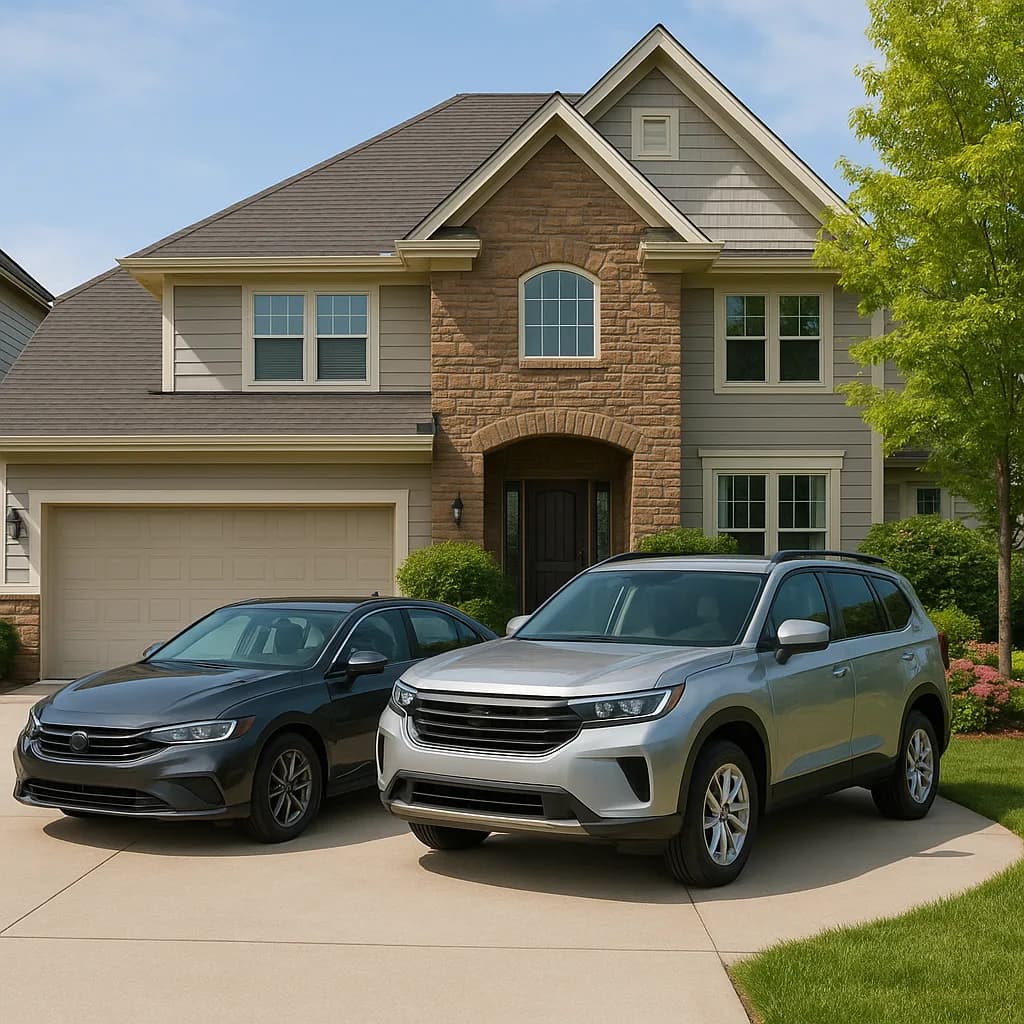
You own two vehicles. One is your daily driver—commute, errands, school runs. The other sits in the driveway most days: a weekend car, a backup vehicle, or a car your teenager uses occasionally. Your insurer charges you full premiums on both, as if each logs 12,000 miles a year. Pay-per-mile insurance promises to fix this—charge you only for the miles you actually drive. But here's the friction: most pay-per-mile programs require a separate policy for each vehicle, and splitting your cars across policies means losing the multi-car discount that currently reduces your combined premium.
The structural question is whether the per-mile savings on the low-mileage car exceed the multi-car discount you lose by splitting the policies. The answer depends on how few miles the second car drives, which carriers write pay-per-mile in your state, and whether your household can structure coverage to preserve both benefits. This article walks the math, names the carriers that offer pay-per-mile programs, and clarifies the policy-structure choice multi-car households face.
Compare car insurance rates in your state
Get quotes from licensed carriers — no obligation, no spam, results in minutes.
Get Your Free QuoteNational Carrier Roster
21 carriers
The national carrier roster includes 21 insurers verified to write pay-per-mile or usage-based programs. Not all operate in every state, and program availability varies by household vehicle count and garaging address.
NAIC carrier licensing data, 2026
How Pay-Per-Mile Programs Price Multi-Vehicle Households
Pay-per-mile insurance replaces the traditional flat monthly premium with a two-part structure: a base rate that covers the vehicle when parked, and a per-mile rate charged for every mile driven. The base rate typically runs lower than a standard premium because it excludes mileage exposure. The per-mile rate varies by carrier, state, and driver profile, but the core mechanic is the same—drive fewer miles, pay less.
Most pay-per-mile programs require each vehicle to sit on its own policy. This is a structural constraint, not a carrier preference. The telematics device or app that tracks mileage is tied to one vehicle and one policy. When you insure two cars, you need two devices, two policies, and two separate billing cycles. This structure conflicts directly with the multi-car discount, which almost always requires every vehicle to sit on the same policy.
A small number of carriers allow multi-vehicle households to enroll multiple cars in a usage-based program while keeping them on one shared policy. These programs typically track mileage across all enrolled vehicles and apply a blended discount rather than pure per-mile pricing. The discount grows as total household mileage drops, but the pricing is not as granular as true pay-per-mile. If your household drives one car heavily and another rarely, the blended approach dilutes the savings on the low-mileage vehicle.
The structural choice is this: split your cars onto separate pay-per-mile policies and lose the multi-car discount, or keep them bundled on one traditional policy and accept that the low-mileage car subsidizes the high-mileage one. The math depends on how large your multi-car discount is and how few miles the second car drives.
The multi-car discount typically reduces your combined premium, but splitting policies to access per-mile pricing on one vehicle forfeits that discount entirely.
When Pay-Per-Mile Beats the Multi-Car Discount

Start with your current combined premium. If your multi-car discount reduces your total cost, splitting the policies means both vehicles revert to single-policy pricing. The low-mileage car moves to pay-per-mile; the high-mileage car stays on a traditional policy but loses the discount. Add the two new premiums together. If the total is lower than your current combined cost, the split saves money. If it's higher, keep the multi-car policy.
The low-mileage vehicle is where the savings appear. A car that drives fewer miles pays a lower per-mile total. A vehicle driven 3,000 miles a year on a pay-per-mile policy will almost always cost less than the same vehicle on a traditional flat-rate policy. But the high-mileage car now pays more, because it lost the multi-car discount. The question is whether the savings on the low-mileage car exceed the cost increase on the high-mileage one.
Related Articles






Carriers That Write Pay-Per-Mile for Multiple Vehicles
Nationally, pay-per-mile programs are offered by a subset of the carrier roster. The largest programs are operated by carriers that specialize in usage-based insurance or telematics-driven pricing. Not all carriers write pay-per-mile in every state, and some restrict enrollment to households with one or two vehicles. Multi-car households should verify program availability and vehicle limits before splitting policies.
A few carriers allow multi-vehicle households to enroll multiple cars in a usage-based program while keeping them on one shared policy. These programs track total household mileage and apply a tiered discount rather than pure per-mile billing. The discount grows as combined mileage drops, but the pricing is less granular than true pay-per-mile. If your household drives one car 15,000 miles and another 2,000 miles, the blended discount reflects the average, not the individual vehicle's usage.
When comparing carriers, ask whether the program requires separate policies per vehicle, whether the household can enroll multiple vehicles on one policy, and whether the per-mile rate varies by vehicle or driver. Some programs charge a flat per-mile rate across all enrolled vehicles; others adjust the rate based on the vehicle's risk profile. The rate structure determines whether splitting policies makes financial sense for your household.
General Driver Monthly Premium Range
National average monthly premiums for general drivers with clean records range from approximately sixty-one to one hundred twenty dollars per month. Multi-car discounts typically reduce combined premiums, but splitting policies to access per-mile pricing forfeits that reduction.
NAIC 2023 Auto Insurance Database (Average Premium Supplement)
Policy Structure and the Multi-Car Discount
The multi-car discount applies when every vehicle in the household sits on the same policy. Most carriers require the vehicles to share a garaging address and be titled to members of the same household. The discount reduces the combined premium, but the reduction is applied at the policy level, not per vehicle. When you split the policies, both vehicles lose the discount and revert to single-policy pricing.
Splitting policies to access pay-per-mile pricing on one vehicle means the high-mileage car now pays the full single-policy rate. The low-mileage car pays the pay-per-mile base rate plus mileage charges. The total cost is the sum of both. Compare this total to your current combined premium with the multi-car discount applied. If the new total is lower, the split saves money. If it's higher, keep the multi-car policy and accept that the low-mileage car subsidizes the high-mileage one.
Mileage Verification and Program Enrollment
Pay-per-mile programs require mileage verification. Most carriers use a plug-in telematics device installed in the vehicle's OBD-II port, or a smartphone app that tracks GPS and motion data. The device or app reports mileage to the carrier monthly, and your bill reflects the miles driven during that period. Some programs also track driving behavior—hard braking, rapid acceleration, time of day—and adjust pricing based on risk signals beyond mileage alone.
Enrollment typically requires a vehicle inspection or odometer photo to establish the starting mileage. The carrier verifies the odometer reading at policy inception, then tracks incremental miles from that baseline. If you switch from a traditional policy to pay-per-mile mid-term, the carrier may prorate the first billing cycle to account for miles driven before enrollment. Multi-vehicle households enrolling multiple cars need separate devices or app installations for each vehicle, even if the cars sit on one shared policy under a blended usage-based program.
Compare Carriers and Run the Math for Your Household
The decision to split policies or keep the multi-car discount depends on your household's specific mileage patterns and the carriers available in your state. Request quotes from carriers that write pay-per-mile programs for the low-mileage vehicle, and compare the per-mile cost structure to your current flat-rate premium. Request a quote for the high-mileage vehicle on a traditional single-policy basis, without the multi-car discount. Add the two premiums together and compare the total to your current combined cost with the discount applied. If the new total is lower, splitting saves money. If it's higher, keep the multi-car policy.
Use the site's comparison tool to identify carriers that write pay-per-mile programs in your state and request quotes for both policy structures. The tool surfaces carriers by household vehicle count and mileage profile, and allows you to compare traditional multi-car policies against split-policy pay-per-mile structures side by side.